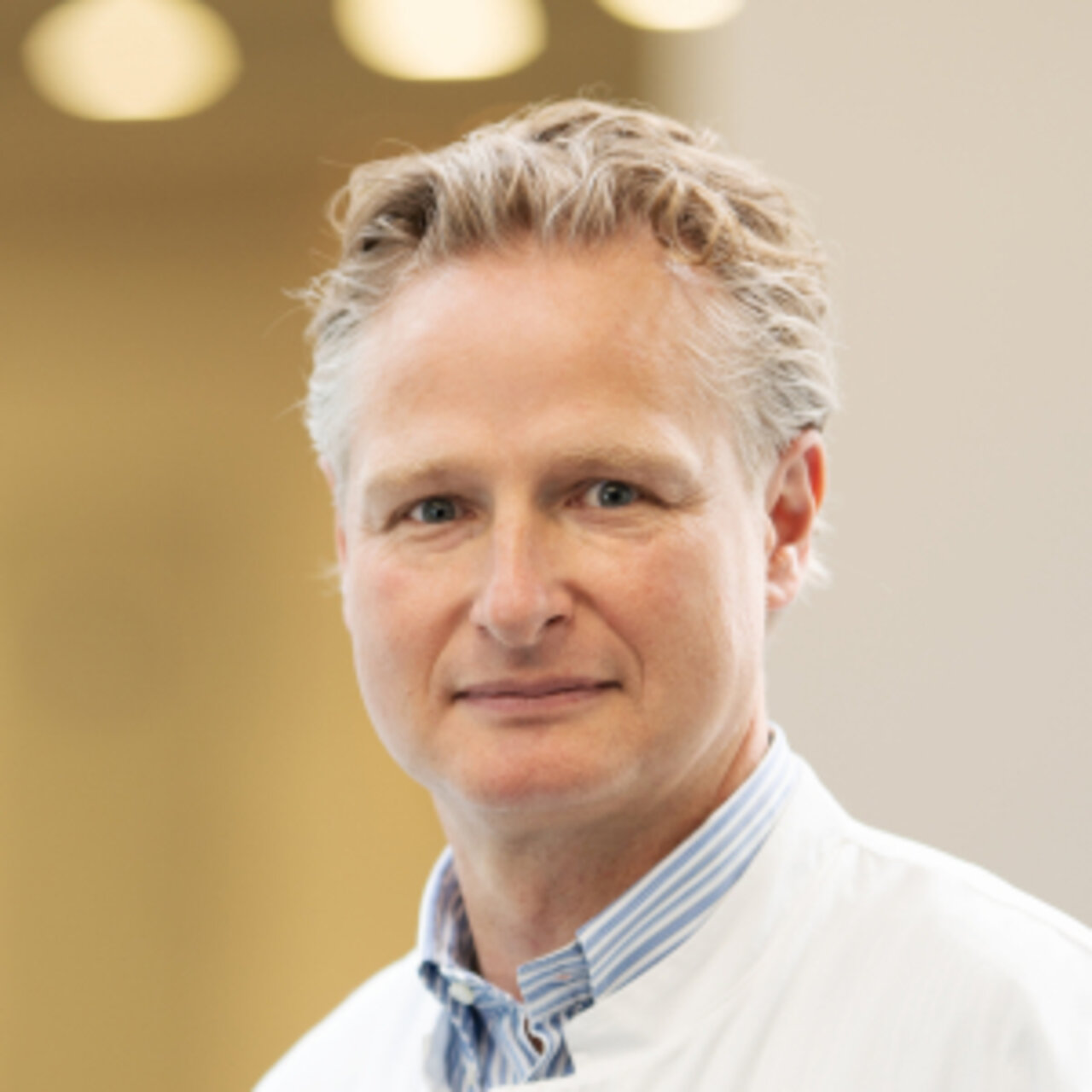
Cardiac Surgery Göttingen: PD Dr El-Essawi
Treatment focus
- Coronary surgery (bypass surgery with and without a heart-lung machine, minimally invasive surgery (MIDCAB))
- Heart valve surgery (aortic valve, catheter technique (TAVI), mitral valve, tricuspid valve)
- Aortic surgery (aneurysms, aortic dissection, aortic valves)
- Cardiac rhythm surgery (pacemakers, ICDs, CRT-Ds, probe removal)
- Cardiac assisting devices and heart transplantation
Contact
University Medical Center Göttingen
Clinic for Cardiothoracic and Vascular Surgery, Heart Center Göttingen, German Center for Cardiovascular Research (DZHK), Partner Site Göttingen
Robert-Koch-Str. 40, D-37075 Göttingen
P: +49 551 8971 4992 F: +49 551 396 8777
Consultation Hours:
Wednesdays 2:00 PM - 4:00 PM
and by appointment

Medical Range
Diagnostic Range of Services
- Heart ultrasound (echocardiography)
- ECG and stress ECG
- Cardiac imaging by computed tomography (CT) or magnetic resonance imaging (MRI)
- Cardiac catheterization
- Swallowing echo (transesophageal echocardiography (TEE))
Therapeutic Range of Services
- Percutaneous transluminal coronary angioplasty (PTCA)
- Rotational angioplasty
- Blade angioplasty
- Coronary lithotripsy
- Bypass surgery
- Cardiac resynchronization therapy (CRT)
- Cardioverter defibrillator implantation (ICD)
- Left ventricular assist device (LVAD)
- Catheter-assisted aortic valve replacement (TAVI)
- Mitral valve valvuloplasty
- Minimally invasive surgical mitral valve reconstruction (MIC-MKR)
- MitraClip or Pascal
- Cardioband
- Catheter-based septum ablation (TASH)
- Catheter intervention for atrial septal defects or ventricular septal defects
More Information
Card
PD Dr Aschraf El-Essawi is a specialist in cardiac surgery and Director of the Clinic for Cardiothoracic and Vascular Surgery at the Universitätsmedizin Göttingen.
PD Dr El-Essawi's team offers the entire spectrum of modern cardiac surgery, focusing on minimally invasive and reconstructive techniques.
As part of the Heart Center of the UMG and a member of the German Center for Cardiovascular Research, the latest innovations and scientific findings are integrated into the clinical routine for the patients' benefit.
Cardiac Surgery Göttingen in Lower Saxony
As a supra-regional center in Lower Saxony, the Universitätsmedizin Göttingen is a maximum care hospital. It also covers the complete spectrum of cardiac surgery in the cardiac surgery section - including heart transplants.
In the run-up to complex heart surgery, patients are inevitably confronted with many questions. PD Dr El-Essawi's team answers these concerns professionally and counters any worries with empathetic clarification.
Specialist for Coronary Surgery
When the coronary arteries are narrowed by progressive atherosclerosis (hardening of the vessels), bypass surgery may be necessary to ensure oxygen supply to the heart muscle. In this procedure, the body's arteries or veins are visualized in their process, such as the internal thoracic artery, which runs across the thorax next to the sternum. After imaging, the vessel can be removed and grafted to the heart muscle as a bridge to the narrowed coronary artery.
Depending on the patient's general condition, the complexity of the vascular status, and the extent and location of the coronary stenosis, a heart-lung machine may be necessary for this surgery, as surgery on the beating heart is not always technically possible. During the surgical intervention, the heart-lung machine takes over the circulation of the body's blood while the heart's action has been temporarily paused by medication. Today, such a profound intervention in cardiac activity is carefully considered, and coronary bypasses are also mainly operated on the self-beating heart (OPCAB).
In all coronary surgery procedures, the University Medical Center Göttingen focuses on establishing minimally invasive surgical techniques (MIDCAB) over conventional open surgical methods. If only vessels on the anterior heart wall need to be operated on, it is possible to avoid transecting the sternum and operate with a small incision on the left side of the chest. A potential complete arterial bypass allows excellent long-term bypass open rates, e.g., with the left internal mammary artery (LIMA) of over 90% after 10 years. Even patients over 80 can still be operated on safely, thanks to the latest techniques.
State of the Art Procedures for Heart Valve Surgery
A large part of the cardiac surgical surgery performed at the University Medical Center Göttingen involves the reconstruction of defective heart valves. Heart valve surgeries on the mitral or tricuspid valve are carried out as minimally invasive as possible in Göttingen. The procedure is done via a mini-thoracotomy between the 4th and 5th ribs on the right side in the inframammary fold. Then the affected heart valves are repaired using a video-assisted keyhole technique with specially developed instruments. Transection of the sternum is not necessary. This makes wound healing less complicated, and patients recover more quickly. In Göttingen, the rate of successfully repaired mitral valves with primary leakage is over 95%. Surgeries for the aortic valve are also carried out minimally invasive, mainly via an upper mini sternotomy.
Using special suture techniques, torn leaflets of the mitral valve and the tricuspid valve can be reattached to the papillary muscles, thus correcting leaflet breakdown and consequent backflow of blood into the atria. This leaves the total filling volume only the outflow through the pocket valves into the great aortas, significantly improving cardiac output.
However, even the pocket valves may no longer close adequately or be narrowed so that proper blood flow is impeded.
In particular, a catheter-based procedure (TAVI) has become established to replace a defective aortic valve. In this procedure, a thin guide tube is inserted, usually through the inguinal artery, against blood flow through the aortic valve into the left ventricle. An airless balloon on which the collapsed valve implant sits is then advanced over the guidance tube and placed at the level of the defective aortic valve.
Finally, the small balloon is forcefully inflated, squeezing the defective aortic valve against the heart wall and functionally replacing it with the consequently unfolded implant.
Utmost Expertise in Aortic Surgery
PD Dr El-Essawi's team not only operates directly on the heart but also on the large outgoing vessels, especially the aorta. If bulges damage the aorta in the wall (aneurysms), the vessel is at risk of rupturing at any time, with life-threatening internal blood loss. Therefore, this ticking time bomb should be surgically relieved as soon as possible.
Acute aortic dissection is also a surgical emergency. Tearing and detachment of the inner vessel wall layers from the overlying outer layers occurs. Blood flow pushes between the two layers and enlarges the defect longitudinally of the vessel. Surgery should be immediately carried out to avoid a total rupture of the aorta.
State-of-the-Art Endovascular Aortic Surgery
Another focus of the HTG Department Göttingen is the minimally invasive endovascular treatment of diseases of the thoracoabdominal aorta. Vascular prostheses (stent grafts) can be advanced into the diseased area of the aorta through a small incision in the groin and precisely positioned. In most cases, an opening of the chest or abdominal cavity can be avoided entirely. Through participation in developing customized endoprostheses, the clinic's expertise in Göttingen in this area is exceptionally high.
Therapy and Treatment for Cardiac Arrhythmias
The team of physicians at the Universitätsmedizin Göttingen is also trained in arrhythmia surgery. This discipline deals with the implantation of pacemakers, internal defibrillators, and a cardiac resynchronization device (CRT-D). Such implants improve patients' quality of life with severe cardiac arrhythmias or therapy-resistant heart failure. Furthermore, "built-in emergency physicians" detect dangerous arrhythmias and restore cardiac activity through targeted electrical impulses.
Psychosomatics Before and After Cardiac Surgery
Heart diseases and the indication for cardiac surgery can lead to severe psychological stress for the affected patients and their relatives. Even though cardiac surgery is nowadays a standardized and safe procedure, accompanying psychosomatic support is of great advantage. Before and after heart surgery, anxiety or feelings of being overwhelmed and helplessness can arise and occasionally lead to depression, anxiety, or delirium symptoms. The HTG Department has established an area for psychosomatics before and after heart surgery and integrated it into the clinical routine of the intensive and general care units. Specialized physicians accompany the patients and their relatives with relieving and supportive conversations on a behavioral-therapeutic and depth-psychological basis. The main reasons for these discussions are pre- and postoperative anxiety and restlessness, family stress, delayed recovery, psychological processing of cardiac surgery, or unexpected complications. In addition to clinical support for patients and relatives, several interdisciplinary clinical studies have been established on optimizing preoperative preparation, expectancy, delirium risk screening and diagnosis, and postoperative optimization of cardiovascular risk factors (secondary prevention).
Team
- Prof. Dr Theodor Tirilomis
Head of the Main Focus Pediatric Cardiac Surgery - Prof. Dr Christoph Leon Bara
Senior Physician - Dr Ahmad Fawad Jebran
Senior Physician Cardiac Surgery / Staff Senior Physician - Florian Elger
Head of Vascular Surgery
Transport Connections
| Göttingen Station | 3 km |
| Kassel-Calden Airport | 67 km |
| Hannover Airport | 139 km |
| Paderborn-Lippstadt Airport | 141 km |
| Frankfurt/Main Airport | 244 km |
Information about Göttingen
Göttingen is a lively science city in the middle of Germany. The unique thing about it is that 30,000 students attend the city's universities and shape its young flair.
But more than 1000 years of history have also left their mark. Middle-age churches, half-timbered houses, and traditional university buildings characterize the cityscape. Since its foundation in the 18th century, the Georg-August University has produced many influential scientists.
Göttingen is also known far beyond its borders as a festival city, where theater, literature, and music have a special significance.

![[Translate to English:] PD Dr. med. El-Essawi - Portrait [Translate to English:] PD Dr. med. El-Essawi - Portrait](/fileadmin/user_upload/Aerzte/Kutschka/El-Essawi-Portrait.jpg)