Specialist in Breast Cancer in Zurich (Switzerland): PD Dr Konstantin Dedes
Treatment focus
- Surgical treatment of breast cancer (breast-conserving surgery, mastectomy)
- Plastic and reconstructive breast surgery (symmetric balancing procedures, contouring, breast reconstruction)
- Systemic cancer therapy (chemotherapy, anti-hormone therapy, antibody therapy)
- Radiation oncology (radiation therapy)
Contact
Hirslanden Klinik im Park
Lake Zurich Breast Center
Seestrasse 220, CH-8027 Zurich
Consultation Hours:
By appointment
Phone hours:
Monday through Friday from 9:00 AM to 4:00 PM

Medical Range
Range of Diagnostic Services
- Breast ultrasound and core needle biopsies
- Minimally invasive ultrasound-guided vacuum-assisted biopsies
Range of Therapeutic Services
- Minimally invasive breast-conserving surgeries for breast cancer
- Nipple-sparing mastectomy with immediate reconstruction
- Systemic drug therapy
- Follow-up care
- Second opinions
More Information
Card
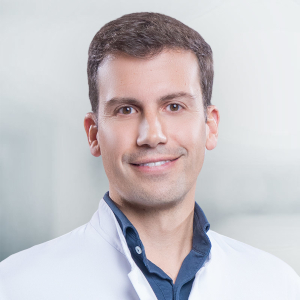
PD Dr Konstantin Dedes is a specialist in surgical gynecology with a focus on gynecologic senology and the Clinical Director of the Lake Zurich Breast Center at Hirslanden Klinik im Park in Zurich.
The interdisciplinary team of experts led by PD Dr Dedes develops a personalized treatment plan for each patient and provides comprehensive, personalized care for all aspects of breast health. This includes early detection and prevention of breast cancer, comprehensive evaluation of breast conditions, individualized therapy, as well as follow-up care and support throughout the entire course of treatment. In addition, the Breast Center is certified according to the quality standards of the Swiss Cancer League and the Swiss Society of Senology.
Breast Cancer Surgery with a Focus on Breast Conservation
Surgical treatment of breast cancer focuses on the complete removal of the tumor. The Lake Zurich Breast Center describes breast-conserving surgery as an important option in which the tumor is removed along with a sufficient margin of healthy tissue. In many cases, this allows the breast to be conserved. Whether this approach is an option depends, among others, on the size, location, and extent of the tumor, the ratio of tumor size to breast size, and the individual clinical picture. PD Dr Konstantin Dedes takes these factors into account when planning the surgical procedure and tailors the treatment to the specific tumor situation.
As part of breast-conserving surgery, an examination of the lymph nodes may also be necessary. To this end, the sentinel node technique also known as a sentinel lymph node biopsy is used, among others, in the breast center. In this procedure, the first lymph nodes in the breast’s lymphatic drainage area are identified, removed, and examined for tumor cells. The results provide important information about possible involvement of the regional lymph nodes and influence further treatment planning. In addition, preoperative marking using mammography, MRI, or ultrasound, intraoperative ultrasound, and, in appropriate cases, frozen-section analysis are available. These procedures support the precise planning and execution of the surgery.
Another consideration is the aesthetic outcome. If the defects are small, the remaining breast tissue can be reshaped during the procedure itself. For larger defects, oncoplastic and reconstructive procedures can be used in collaboration with the center’s plastic surgeons. This allows us to combine the necessary oncological safety with the goal of achieving the most harmonious result possible.
Extensive Experience in Breast Cancer Surgery Involving Mastectomy
Breast-conserving surgery is not always possible or medically advisable for every patient. If removal of all breast tissue is necessary, a mastectomy may be required. This procedure may be necessary, for example, if a very large or extensive tumor precludes breast-conserving treatment. The patient’s personal preferences may also be considered when choosing the surgical approach.
Today, a variety of surgical techniques are used for breast removal. The breast center specifies, among others, skin-sparing procedures in which the largest possible portion of the skin is preserved. Under appropriate conditions, a nipple- and skin-sparing mastectomy may also be an option. The choice of surgical technique depends on the tumor’s location, the anatomical conditions, and the planned reconstruction.
PD Dr Konstantin Dedes evaluates the available findings in detail before the surgery. These include the size and location of the tumor, its type, the stage of the disease, and the biological characteristics of the tumor tissue. This information is discussed by representatives of the relevant medical disciplines during the interdisciplinary breast tumor board meeting, where it is used to develop a treatment strategy tailored to the individual patient.
Plastic Breast Surgery and Breast Reconstruction After Breast Cancer
A mastectomy can also be emotionally distressing for the patients. Therefore, the Lake Zurich Breast Center offers various options for breast reconstruction. Reconstruction can be carried out immediately as part of the tumor surgery or at a later date.
Various surgical procedures are available for breast reconstruction. These include breast reconstruction using the patient’s own tissue, implant-based procedures, and autologous fat transfer, also known as lipofilling. In breast-conserving surgery, the remaining breast tissue can also be reshaped using oncoplastic techniques to achieve the most natural-looking breast shape possible. The most suitable method depends, among other factors, on the patient’s previous or planned cancer treatment, her anatomical conditions, and her personal preferences. The options for immediate or delayed reconstruction are therefore discussed in detail and tailored to the individual situation.
Even after breast cancer treatment has been completed, cosmetic adjustments or surgeries to balance the breasts may be advisable. The Breast Center therefore provides long-term support to patients and offers secondary reconstructive procedures as needed. The goal is a harmonious result that takes into account both medical requirements and personal preferences.
Medicated treatment for Breast Cancer in Zurich
Breast cancer treatment often involves a combination of several therapies. The choice of appropriate drug therapy depends, among others, on the tumor’s biological characteristics, the stage of the disease, the risk of recurrence, and any underlying medical conditions. At the Breast Center, these factors are considered by an interdisciplinary tumor board and then discussed with the patient.
The range of treatment options includes various systemic therapies. For example, chemotherapy can be administered even before surgery. This so-called neoadjuvant chemotherapy can shrink the tumor and, in appropriate cases, improve the conditions for breast-conserving surgery. Treatment after surgery is also possible. This adjuvant chemotherapy is intended to combat any invisible cancer cells that may remain in the body and reduce the risk of recurrence.
Anti-hormonal or endocrine therapy may be used for hormone receptor-positive breast tumors. It inhibits the action or production of hormones that can promote the growth of hormone-sensitive tumor cells. The choice of treatment depends, among others, on the hormone receptor status, the individual risk of recurrence, and other factors such as menopausal status. For HER2-positive breast cancer, targeted therapies are also available. These target the HER2 receptor on the tumor cells. Depending on the stage of the disease and the treatment situation, different substances are used.
The decision for or against a specific medicated therapy is made based on the respective findings. In addition to the tumor characteristics, pre-existing conditions, previous treatments, personal circumstances, and other relevant factors are also taken into account. Systemic treatment is planned on an interdisciplinary basis and in close collaboration with the medical oncology department. PD Dr Konstantin Dedes, a specialist in gynecological senology, is involved in the overall planning of breast cancer treatment.
Radiation Therapy for Breast Cancer – Modern Radiation Oncology Treatment
Radiation therapy is also an important part of breast cancer treatment. Radiation therapy is generally recommended after breast-conserving surgery, in particular, to reduce the risk of local recurrence. In certain situations, this recommendation may be changed. After a total mastectomy, radiation therapy may also be indicated if certain risk factors are present.
Radiooncological treatment is carefully planned because vital organs such as the heart and lungs are located in close proximity to the breast. To this end, the breast center develops a personalized radiation treatment plan based on planning CT images. Modern radiation techniques allow for the most precise treatment of the targeted area possible and help to spare surrounding healthy tissue as much as possible.
An essential component of the treatment concept is interdisciplinary collaboration. In addition to gynecology and breast surgery, the breast center includes, among others, medical oncology, radiology, radiation therapy, pathology, psycho-oncology, physical therapy, and breast care nurses. Tumor board meetings are held weekly to jointly coordinate treatment plans.
This provides breast cancer patients with a comprehensive network of care, ranging from diagnosis and treatment planning to surgical and medical treatment, radiation therapy, breast reconstruction, and follow-up care. PD Dr Konstantin Dedes, as Clinical Director and specialist in gynecological senology, is part of this interdisciplinary treatment approach at the Lake Zurich Breast Center.
Please visit the Lake Zurich Breast Center website for more information.
Curriculum Vitae
| 2024 – to date | Clinical Director, Lake Zurich Breast Center |
| 2022 – to date | Affiliated Physician at Hirslanden Klinik im Park, Zurich |
| 2022 | Focus on Gynecologic Senology |
| 2019 - 2022 | Senior Physician, Department of Gynecology, Universitätsspital Zurich Head of the Breast Cancer Center, Comprehensive Cancer Center Zurich |
| 2019 | SGGG Diploma in Senology |
| 2018 | Venia legendi in Obstetrics and Gynecology, University of Zurich |
| 2017 | Senior Breast Surgeon, German Cancer Society |
| 2013 - 2019 | Senior Physician, Department of Gynecology and Obstetrics, Universitätsspital Zürich Breast Cancer Center Coordinator |
| 2012 | FMH Surgical Gynecology and Obstetrics |
| 2011 - 2012 | Senior Physician, Department of Obstetrics and Gynecology, Kantonsspital |
| 2010 - 2011 | Clinical Fellow, Royal Marsden NHS Foundation Trust, London |
| 2009 - 2011 | Research Fellow, Institute of Cancer research, London |
| 2005 - 2009 | Assistant Physician, Department of Obstetrics and Gynecology, Universitätsspital Zurich |
| 2003 - 2005 | Assistant Physician, Department of Visceral Surgery, Universitätsspital Zurich |
| 2003 | State Examination and Doctorate at the University of Zurich |
| 1997 - 2003 | Medical Studies of Human Medicine, University of Zurich |
Location
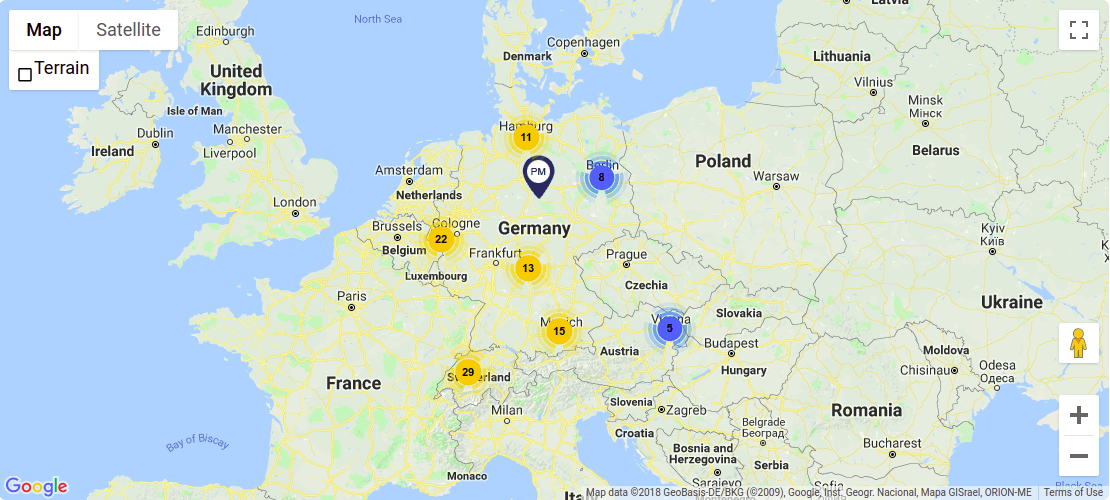
Location See-Spital
Brustzentrum Zürichsee
Asylstrasse 19, CH-8810 Horgen
T: +41 44 728 11 11
GynPraxis Thalwil
Alte Landstrasse 160, CH-8800 Thalwil
Transport Connections
| Zurich Main Station | 3,2 km |
| Zurich Airport | 14 km |
| Basel Airport | 93 km |
| Bern Belp Airport | 134 km |
| Geneva Airport | 277 km |
Information about Zurich
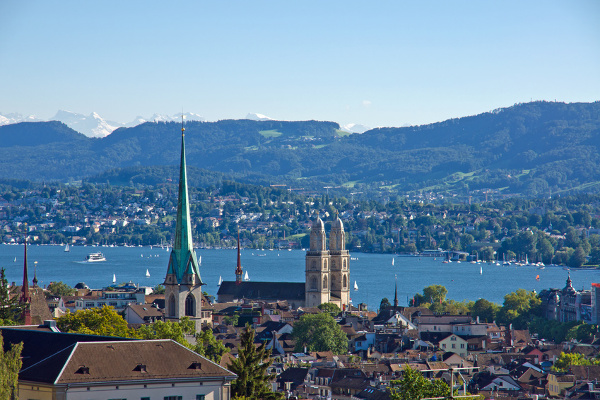
The capital of the canton of the same name is also the largest city in Switzerland. Geographically it is located north in eastern Switzerland. Zurich is situated on the Limmat River, directly at the outflow of Lake Zurich, and is thus also called the "Limmat City." Economically, socially and scientifically, Zurich is considered the center of Switzerland. Therefore, large banks, many media companies, and international companies are located there, and at the same time, the cultural offer is rich. The well-known Swiss Federal Institute of Technology Zurich (ETHZ) gives Zurich an international name in educational institutions.