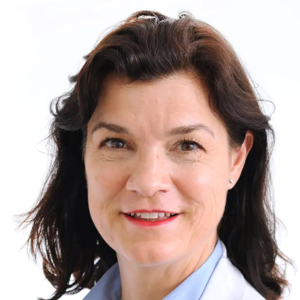
Specialist in Gynecological Oncology and Breast Cancer in Basel (Switzerland): Prof. Dr Rosanna Zanetti Dällenbach
Treatment focus
- Complex gynecological tumors (ovarian, tubal, and peritoneal carcinomas)
- Major interdisciplinary debulking surgery for ovarian, fallopian tube, and peritoneal cancer
- Radical removal of the uterus in cases of cervical carcinoma
- Radical vulvectomy (removal of the external genital organs), with plastic reconstruction if necessary
- Conization and curettage for precancerous lesions (dysplasia)
- Surgical treatment of breast cancer (breast-conserving surgery, removal of lymph nodes, reconstructive breast surgery)
Contact
St. Claraspital
Gynecology
Kleinriehenstrasse 30, CH-4058 Basel
Consultation Hours:
Mon–Fri 8:00 AM–12:00 PM, 1:30 PM–5:00 PM
By appointment

Medical Range
Range of Diagnostic Services
- Breast:
- Clinical examination
- Breast ultrasound
- Breast biopsy and lymph node biopsy
- Gynecological Oncology:
- Gynecological clinical examination
- Abdominal and transvaginal ultrasound
Range of Therapeutic Services
- Breast:
- Breast-conserving tumor surgery
- Removal of lymph nodes
- Reconstructive breast surgery (with implants or autologous tissue)
- Surgery for benign breast conditions
- Gynecological Oncology:
- Dysplasia (precancerous lesions)
- Ovarian cancer
- Fallopian tube cancer
- Peritoneal cancer
- Cervical cancer
- Uterine cancer
- Vulvar/vaginal carcinoma
More Information
Card
Prof. Dr Rosanna Zanetti Dällenbach is a specialist in gynecology and obstetrics with a focus on gynecological oncology and senology. She is the head physician of gynecology at St. Claraspital in Basel.
The experienced team led by Prof. Zanetti Dällenbach specializes in diagnosing tumors of the breast and female reproductive organs and treating them conservatively or surgically in accordance with the latest scientific standards. This guarantees the best possible care for patients with gynecological tumors. The Swiss decision-making body has confirmed the team's high quality and expertise in highly specialized medicine, awarding it a service contract for the treatment of complex gynecological tumors.
Complex Tumor Surgery for Ovarian, Fallopian Tube, and Peritoneal Cancer
Cancer of the ovaries, fallopian tubes, or peritoneum is among the most aggressive types of tumors in gynecology. Since it is often only detected at a late stage due to nonspecific gastrointestinal symptoms or an unexplained increase in abdominal girth, a great deal of experience is required for its diagnosis and treatment. Prof. Dr Rosanna Zanetti Dällenbach and her team at St. Claraspital in Basel specialize in the treatment of patients with such tumors. The primary goal of every procedure is the complete removal of all visible tumor tissue.
This often requires complex surgery that may affect several organs in the abdominal cavity. In advanced stages, this may include the removal of parts of the intestine, spleen, or diaphragm. To ensure these surgeries are safe and successful, the head physician works closely with experienced colleagues from other disciplines, including abdominal surgery and urology. Modern surgical techniques, including minimally invasive procedures, are used depending on the stage of the tumor.
After the surgery, a joint tumor conference will be held to determine which further treatment steps are appropriate. These may include chemotherapy or special follow-up care. For certain types of tumors, targeted therapy or maintenance therapy is also recommended to reduce the risk of recurrence.
Thanks to this close cooperation and the high level of specialization at St. Claraspital, patients receive individually tailored treatment based on the latest scientific findings, offering them the best possible chances of recovery.
Interdisciplinary Tumor Surgery for Advanced Abdominal Cancer
Comprehensive and precise surgical treatment is crucial when treating advanced tumor disease in the uterus, ovaries, or peritoneum. At St. Claraspital in Switzerland, such procedures are planned and carried out on an interdisciplinary basis under the direction of Prof. Dr Rosanna Zanetti Dällenbach. Specialists from several fields, such as abdominal surgery, urology, oncology, and anesthesiology, work closely together, as advanced tumors often spread to various organs in the abdominal cavity.
In a single surgery, all tumor foci are removed as completely as possible without impairing the function of essential organs. State-of-the-art surgical methods also enable complex procedures in the upper and lower abdomen. Depending on the findings, parts of the bladder, colon, or small intestine may also be affected and require specialist treatment.
Before the procedure, each patient is examined individually and reviewed by a specialized tumor board. There, the team of experts decides whether immediate surgery is possible or whether chemotherapy should first be used to shrink the tumor. Imaging techniques such as CT and MRI help to determine the exact extent of the disease and plan the procedure optimally.
After the surgery, an experienced team provides close monitoring and coordinated aftercare. Specialized pain therapy, nutritional counseling, and psycho-oncological support are an integral part of the treatment concept. This ensures that the treatment is not only effective from an oncological perspective, but also as well tolerated as possible for the patient.
Treatment of Uterine or Vulvar Cancer
Surgical treatment is often the most important and effective therapy to treat cancer of the uterus or external genital organs. The focus is on the complete removal of the tumor tissue to achieve the most permanent cure possible. At St. Claraspital in Basel, Prof. Dr Rosanna Zanetti Dällenbach, a specialist in gynecological oncology and breast cancer, carries out these procedures with extensive experience and in accordance with the latest medical standards.
Depending on the extent of the disease, radical removal of the uterus and adjacent tissue may be necessary to treat uterine cancer. The type of procedure depends on the stage of the tumor: in early stages, organ-preserving surgery is sometimes possible, especially in younger women who wish to have children.
Special attention is paid to ensuring that all affected structures are safely removed without unnecessarily damaging healthy organs. If lymph nodes are affected, they can also be removed during the same surgery. The removal is carried out using sentinel lymph node biopsy or systematic lymphadenectomy. In the case of vulvar cancer, i.e., malignant changes in the external genital organs, the procedures are also planned on an individual basis.
Once the tumor has been completely removed, plastic reconstruction is provided if necessary to restore function and appearance as best as possible. To this end, the team works closely with specialized plastic surgeons who use modern flap plasty and reconstructive procedures.
Patients benefit from treatment that combines surgical precision with a high level of medical safety. Close cooperation between plastic surgery and oncology ensures comprehensive care from surgery through follow-up.
Many Years of Experience in Treating Precancerous Conditions
Precancerous lesions in the cervix or the mucous membranes of the external genital organs are now often detected at an early stage thanks to modern screening tests. At St. Claraspital in Switzerland, such changes are carefully investigated and treated targeted before they can develop into malignant tumors.
Prof. Dr Rosanna Zanetti Dällenbach and her team provide diagnostics and therapy in accordance with clear medical guidelines. If the findings are abnormal, a colposcopy is carried out first – an enlarged view of the cervix – and a small tissue sample is taken to determine the type and extent of the change.
Depending on the results, a conization, i.e., cone-shaped removal of the lesion, may become necessary. This involves gently removing the affected cell areas while preserving the healthy structures. The procedure is usually carried out in an outpatient setting or during a short inpatient stay. The treatment prevents the development of cancer without impairing the function of the affected organs. In particular, fertility remains intact in most young women.
All patients undergo frequent follow-up examinations to ensure that no further cell changes occur. The first check-ups take place after three and six months, followed by annual check-ups. This targeted and careful approach allows complete healing in most cases, reliably preventing the disease from progressing.
Modern Oncological Therapy for Breast Cancer in Basel
At St. Claraspital, breast cancer is treated according to the latest medical guidelines. The breast cancer specialist offers a wide range of drug therapies that are individually tailored to the tumor characteristics and stage of the disease.
Treatment options include hormone therapy, which inhibits tumor growth by influencing hormonal signaling pathways, chemotherapy, which destroys explicitly fast-growing cancer cells, and modern immunotherapies, which support the immune system in fighting tumor cells. Depending on the findings, the therapies can also be combined to achieve the best possible effect.
Before starting the therapy, the tumor biology is thoroughly analyzed, including molecular and imaging tests, to tailor the treatment precisely to the tumor. During therapy, patients are monitored regularly, side effects are detected early, and adjustments are made as needed.
This structured approach enables targeted, effective tumor treatment, reduces the risk of recurrence, and ensures that the therapy is tailored to the patient's individual needs and health status.
Specialist in Surgical Breast Cancer Treatment & Reconstruction
Prof. Dr med Rosanna Zanetti Dällenbach specializes in the surgical treatment of breast cancer. She provides breast-conserving surgery and total mastectomy, with the choice of procedure depending on the size, location, and spread of the tumor. During surgery, the lymph node status is also checked — either using the sentinel lymph node technique or through an extended biopsy, depending on the findings.
If a complete mastectomy is necessary, reconstruction can be done during the same procedure. Various reconstructive procedures are available for this purpose: from the use of implants to autologous tissue reconstruction using the patient's own tissue from the abdomen or back. The method chosen depends on medical conditions, body constitution, and the patient's preferences.
This integrated treatment strategy combines oncological safety with aesthetic reconstruction. Affected women receive comprehensive care from a single source — from the initial procedure to reconstruction and long-term follow-up.
Curriculum Vitae
| 2019 | Second prize in free communication, SGGG 2019 |
| 2019 | Prize from «Fondazione Pro-Senologia», Senology Congress in St. Gallen in August 2019 |
| 2019 | Senior Lecturer at Universität Basel |
| since 2016 | Head Physician, Gynecology and Gynecological Oncology, Claraspital Basel |
| 2016 | Head of the Breast Center at Universitätsspital Basel |
| Since 2015 | Certified Breast Surgeon |
| 2013 | Focus on Gynecological Oncology |
| 2013 - 2015 | Representative Head of the Breast Center at Universitätsspital Basel |
| 2011 - 2016 | Representative Head Physician, Gynecology and Gynecological Oncology, Universitätsspital Basel |
| 2005 - 2010 | Senior Physician, Frauenklinik at Universitätsspital Basel |
| 2008 | Habilitation |
| 2006 | Gynecology and Gynecological Oncology Charité Berlin, Germany |
| 1999 - 2016 | Head of the Breast Consultation Hours of the Frauenklinik at Universitätsspitals Basel |
| 1997 - 2005 | Senior Physician, Gynecology and Obstetrics, of the Frauenklinik at Universitätsspitals Basel |
| 1997 | Medical Specialist Exam in Gynecology and Obstetrics |
| 1996 - 1997 | Assistant Physician, Gynecology and Obstetrics, Baden Kantonspital |
| 1996 | Assistant Physician, Gynecology and Obstetrics, Groote Schuur Hospital, University of Cape Town |
| 1993 - 1995 | Assistant Physician, Gynecology and Obstetrics, Thun Regionalspital |
| 1992 | Assistant Physician, Surgery, Bezirksspital Herzogenbuchsee |
| 1992 | ECFMG Doctorate (American State Examination) |
| 1991 | State Examination |
| 1984 - 1991 | Medical Studies in Fribourg and Basel |
Team
- Dr Pachuen Landwehr
Senior Physician - Med Pract Roberto Rodriguez
Senior Physician - Dr Gloria Ryu
Senior Physician - Victor Balan
Representative Senior Physician - Nicole Künzle
Representative Senior Physician
Location
Transport Connections
| Basel Bad Train Station | 1 km |
| Basel Train Station SBB | 4 km |
| Basel EuroAirport | 19 km |
| Zürich Airport | 86 km |
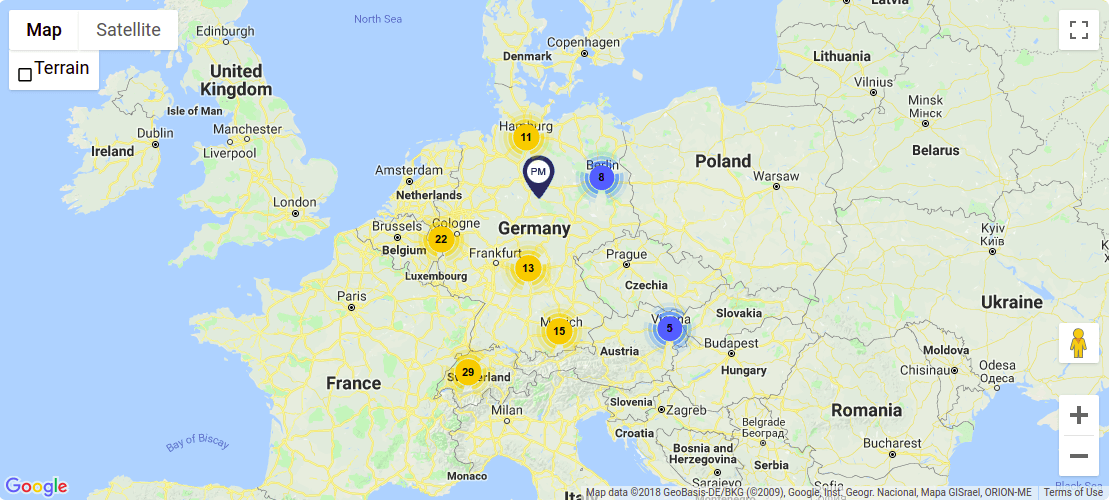
Information about Basel
The city of Basel is geographically located in the far north-west of Switzerland, in the border triangle between Germany, France and Switzerland. It is the third largest city in the country and lies directly on the River Rhine. Basel nestles on both sides of the Rhine and is divided into Grossbasel on the left bank and Kleinbasel on the right bank. Basel is considered the health centre of north-western Switzerland on the Upper Rhine.