Vascular Medicine Berlin-Schöneberg: Prof. Dr Ernst Weigang
Treatment focus
- Open and minimally invasive treatment of aortic aneurysms and other vascular aneurysms in various locations
- Surgeries for carotid artery stenosis using autologous vascular reconstruction or selected stenting procedures
- Bypass surgery and open vascular reconstruction for arterial occlusions and peripheral arterial occlusion disease (intermittent claudication), and for diabetic foot syndrome
- Catheter-based treatment of vascular narrowing, vascular occlusions, blood clots, and thrombosis
- Treatment of venous diseases and chronic wounds, especially varicose veins, venous thrombosis, diabetic foot, and “open leg” (leg ulcer)
- Dialysis shunt surgery and placement of permanent vascular access devices (catheters)
Contact
Vivantes Auguste-Viktoria-Klinikum
Clinic for Vascular Medicine
Rubensstraße 125, D-12157 Berlin-Schöneberg
Consultation Hours:
Monday: Private consultation hours from 8:30 AM to 2:00 PM
Tuesday - Friday: 8:30 AM to 2:00 PM
Wound care consultation hours daily

Medical Range
Range of Diagnostic Services
- Daily vascular consultation hours
- Ankle-brachial index (ABI) pressure index measurement
- Treadmill test
- Color-coded duplex sonography (CCDS)
- Transcutaneous oxygen partial pressure measurement (tcpO2)
- CT angiography
- MR angiography
- Catheter and CO2 angiography
Range of Therapeutic Services
Surgical Therapy
- Treatment of carotid stenosis (narrowing of the carotid artery)
- Repair of aneurysms via open surgery (without cardiopulmonary bypass machine)
- All bypass procedures and open surgical treatments for arterial occlusions (supraaortic, abdominal, iliac, femoropopliteal, crural, pedal)
- Dialysis shunt surgery and shunt revisions; placement of dialysis catheters (vascular access for dialysis)
- Port and Demers catheter placements (tunneled atrial catheter)
- Treatment of varicose veins
- Treatment of venous thrombosis
- Treatment of diabetic foot syndrome
- Surgical treatment of leg ulcers
- Modern wound care for chronic wounds, including vacuum-assisted therapy
Endovascular and Interventional Therapy
- Treatment of aneurysms in the thoracic, abdominal, pelvic, and popliteal arteries using specialized prostheses (stent grafts)
- All percutaneous procedures for reopening blood vessels (balloon angioplasty, stents, drug-eluting balloons and stents, removal or dissolution of clots in veins and arteries, reopening of blood vessels with special catheters)
- All vascular occlusion procedures
- Other special procedures (stents in the carotid artery)
More Information
Card
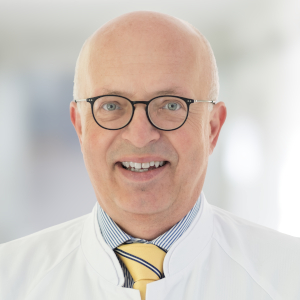
Prof. Dr Ernst Weigang is a specialist in vascular and cardiac surgery and the head physician of the clinic for vascular medicine at the Vivantes Auguste-Viktoria-Klinikum in Berlin-Schöneberg. This experienced vascular specialist has many years of clinical, scientific, and medical leadership expertise. Before joining Vivantes, he acted, among others, as head physician, head of an interdisciplinary vascular center, and medical director.
In his treatment approach, Prof Weigang places particular emphasis on individual tailored and minimal invasive therapeutic procedures. Together with his specialized team, he combines many years of surgical experience with modern catheter-based methods and close interdisciplinary collaboration.
Vascular Medicine Specialist in Berlin-Schöneberg
The clinic for vascular medicine at the Auguste-Viktoria-Klinikum treats diseases of the arterial and venous vascular systems in accordance with up-to-date medical standards. When selecting a treatment, Prof. Weigang considers not only the type and severity of the vascular disease but also any existing comorbidities and the patient’s surgical risk. Based on this evaluation, a decision is made as to whether open surgery, a catheter-based procedure, or a combination of both approaches is most appropriate.
A state-of-the-art hybrid operating room is available for complex vascular surgeries. The catheter system used there enables CT-like images and a three-dimensional visualization of the blood vessels. This allows open surgeries and minimally invasive catheter procedures to be combined in a single treatment, if necessary. Older adults and high-risk patients, in particular, benefit from the precise planning and the ability to perform various treatment steps in a single procedure.
Long-Standing Experience with Aortic Aneurysms and Carotid Stenosis
Prof. Weigang places special emphasis on the treatment of aortic aneurysms, which are pathological bulges in the aorta where the risk of rupture increases, particularly as the aneurysm grows larger. The individual risk depends, among others, on the location, size, and morphology of the aneurysm. Depending on the location, size, and characteristics of the aneurysm, treatment is carried out either through open surgery or by inserting a stent graft prosthesis into the affected vessel via a catheter.
The range of treatments includes aneurysms of the aorta in the chest and abdomen, as well as aneurysms of the iliac and femoral arteries. Open aneurysm surgery can be carried out at the hospital without using a cardiopulmonary bypass machine). Special vascular prostheses, known as stent grafts, are available for minimally invasive treatment.
Beyond that, Prof. Weigang specializes in the treatment of narrowing of the carotid artery, known as carotid stenosis. Such narrowings can impair blood flow to the brain and increase the risk of a stroke. In open surgery, the narrowing is removed and the carotid artery is reconstructed using the patient’s tissue. For selected patients, catheter-based stenting procedures may be an alternative. The most appropriate procedure is carefully determined by the team of experts based on the individual patient’s findings.
Modern Treatment of Peripheral Arterial Disease Using Bypass Surgery and Catheter Procedures
In peripheral arterial disease (PAD), also known as intermittent claudication, narrowed or blocked arteries lead to reduced blood flow to the legs. Typical symptoms include exertion-induced pain, which causes those affected to stop walking regularly. In advanced stages of the disease, pain at rest, slow-healing wounds, or tissue damage may occur.
Prof. Weigang and his team carry out all types of bypass procedures and open vascular reconstructions for arterial occlusions. The range of surgical procedures extends from the vessels in the neck and abdomen, through the pelvic arteries, to the vessels in the thigh, lower leg, and foot. A bypass crosses over the occluded section of the vessel, thereby restoring blood flow to the affected area of the body.
Many cases of vascular narrowing can also be treated using minimally invasive catheter-based procedures. These include balloon angioplasty, drug-eluting balloons, stent implantation, and specialized procedures to reopen blocked vessels. Depending on their location and the findings, blood clots in arteries or veins can be removed using catheter-based procedures or, in certain situations, dissolved with medication.
Vascular Diseases, Chronic Wounds, and Dialysis Access Sites
Besides arterial vascular diseases, the clinic also treats varicose veins and venous thrombosis. Depending on the type and severity of the condition, a decision is made as to whether surgical, catheter-based, or vascular occlusion treatment is appropriate.
Another key focus is the management of chronic wounds, such as those associated with diabetic foot syndrome or leg ulcers (commonly known as “open legs”). In addition to improving blood circulation, modern wound treatment methods are available. The goal is to enhance wound healing, control infections, and preserve endangered limbs whenever possible.
Prof. Weigang offers the full range of dialysis access surgery for dialysis patients. This includes the initial placement of a dialysis shunt, surgical correction of existing shunts, and treatment of shunt occlusions. If necessary, dialysis catheters, port systems, and permanently tunneled Demers catheters can also be implanted.
Please visit the website of the Vivantes Auguste-Viktoria-Klinkum for more information
Curriculum Vitae
Professional Career
| since 2026 | Head Physician of the Clinic for Vascular Surgery, Vascular Medicine, and Endovascular Therapy, Vivantes Auguste-Viktoria-Klinikum Berlin |
| 2013-2026 | Head Physician of the Clinic for Vascular Surgery, Berlin-Brandenburg Vascular Center, Evangelisches Krankenhaus Hubertus, Medical Director (2022–2025) |
| 2007-2013 | Managing Senior Physician of the Clinic for Cardiac, Thoracic, and Vascular Surgery and Head of the Endovascular Vascular Surgery Section at the University Medical Center of Johannes Gutenberg University Mainz |
| 2004-2007 | Senior Physician in Charge and Representative Head of Aortic and Endovascular Vascular Surgery, as well as Head of the Outpatient Vascular Center at the Clinic for Cardiac and Vascular Surgery, Universitätsklinikum Freiburg |
| 1998-2004 | Research Fellow at the Clinic for Cardiovascular Surgery and Head of the Interdisciplinary “Marfan Syndrome” Research Group, Universitätsklinikum Freiburg |
| 1996-1998 | Assistant in the Cardiac, Thoracic, and Vascular Surgery Training Program, Clinic for Cardiac, Thoracic, and Vascular Surgery, Deutsches Herzzentrum Berlin (DHZB) |
| 1994-1995 | Resident, Cardiac Surgery, Frankfurt |
Education
| 2012 | Radiation Protection (Interventions) |
| 2009 | Certified Endovascular Specialist of the German Society for Vascular Surgery |
| 2009 | Professor (APL) at the Albert-Ludwigs-Universität Freiburg |
| 2006 | Habilitation and Teaching Certification in Cardiovascular Surgery |
| 2006 | Specialized Knowledge in Radiation Protection (X-ray Diagnostics of the Thorax and the Vascular System) |
| 2006 | Medical Specialist in Vascular Surgery |
| 2004 | Medical Specialist in Cardiac Surgery |
| 1997 | Promotion, Friedrich-Wilhelms-Universität Bonn |
| 1987-1994 | Studies in Human Medicine at Freie Universität Berlin and the Rheinische Friedrich-Wilhelms-Universität Bonn |
Team
- Dr Oussama Ochi
Senior Consultant - Dr Kirsten Haltaufderheide
Senior Physician - Dr Alicja von Freyhold
Senior Physician
Extras
- The team speaks English, Arabic, French, Turkmen, Turkish, Polish, Romanian, Russian, Chinese, Uyghur, Hindi, Marathi, Malayalam, Italian, Spanish, Bosnian, Croatian, and Serbian
- Easy to reach by public transportation
- Cafeteria on the hospital premises
- Hospital chaplaincy with regular devotional services
- Varied selection of meals
- Free TV, phone calls (to German landlines), daily newspapers, and free Wi-Fi
Location
Transport Connections
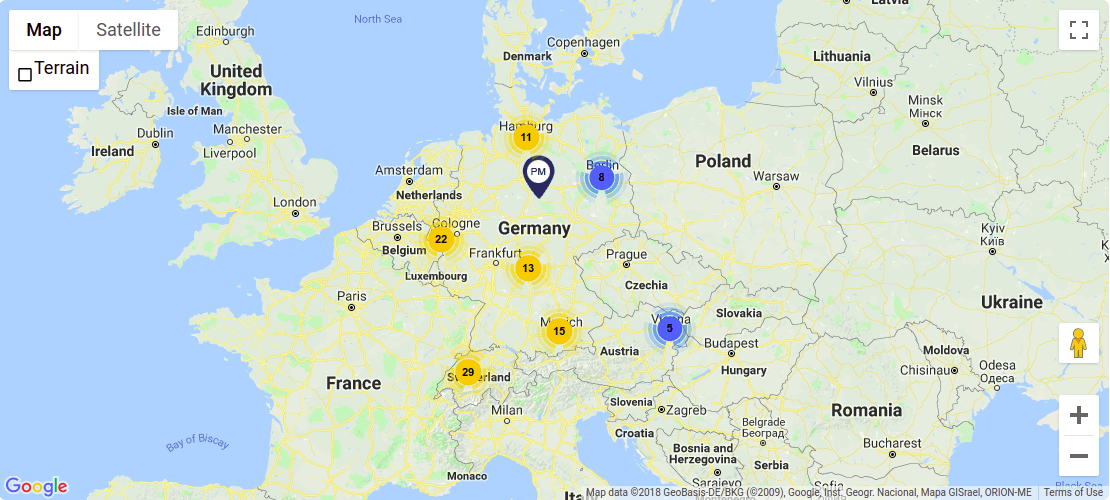
| Berlin Main Station | 9 km |
| Berlin Airport | 26 km |
Information about Berlin
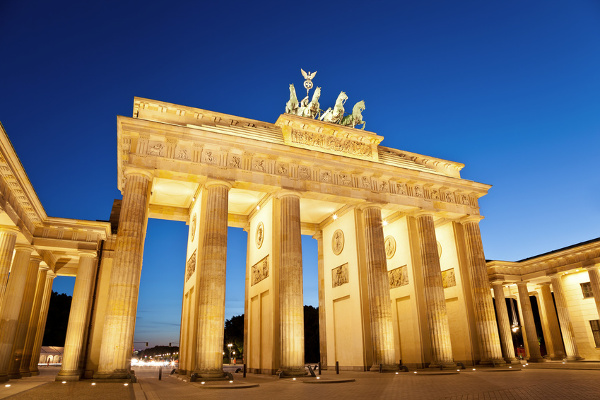
The German state capital of the federal state with the same name is located in the east of the Federal Republic of Germany. Berlin is the largest city in the country and the seat of government since 1999. The rivers Spree, Havel and smaller rivers and streams flow through the city. Furthermore, the cityscape is characterised by lakes, forests and parks, making Berlin one of the greenest capitals. The Berlin Mitte district is located in the centre of the 12 districts into which the city is divided.