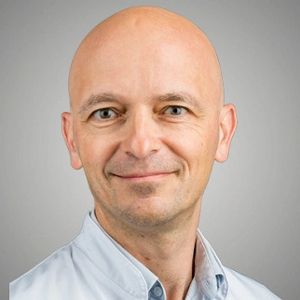

Neurosurgery Lucerne (Switzerland): Prof. Dr Michael Reinert
Treatment focus
- Brain tumors
- Brain aneurysms
- Acoustic neuroma
- Pituitary adenomas
- Hydrocephalus
- Spinal surgery
- Pain therapy, trigeminal neuralgia, infiltrations
Contact
Clinic for Neurosurgery and Spinal Surgery, Central Switzerland
Hirslanden Klinik St. Anna
St. Anna-Strasse 32, CH-6006 Lucerne
Consultation Hours:
Monday to Friday from 9:00 AM to 5:00 PM
By appointment

Medical Range
Diagnostisches Leistungsspektrum
- MRI (magnetic resonance imaging)
- CT (computed tomography)
- CT Angio (CT angiography)
- SPECT (single photon emission computed tomography)
- PET (positron emission tomography)
- Ultrasound
- Fluoroscopy
Therapeutisches Leistungsspektrum
- Microsurgery
- Endoscopy
- Minimally invasive surgery
- Awake craniotomy
- Neuromonitoring
- Spinal surgery
- Pain therapy
More Information
Card
Prof. Dr Michael Reinert is a specialist in neurosurgery at the Clinic for Neurosurgery and Spinal Surgery Central Switzerland at the Hirslanden Klinik St. Anna.
Prof. Reinert specializes in the neuro-oncological treatment of brain and skull-base tumors, spinal surgery, and interventional pain therapy. His range of services includes modern neurosurgical and spinal surgery procedures, ranging from minimally invasive surgery to complex stabilizing and corrective procedures, using state-of-the-art technology such as surgical microscopes, three-dimensional imaging, and navigation for skull or spinal procedures.
Specialist in Pituitary Adenomas and Brain Tumors in Lucerne
Prof. Dr Michael Reinert treats patients with pituitary gland and brain tumors with the utmost expertise. He uses microsurgical and endoscopic procedures for pituitary adenomas, often accessing the tumor through the nose. This technique allows for very precise tumor removal while protecting the surrounding tissue. Precise surgery is particularly important in treating hormone-active adenomas so that symptoms such as visual disturbances or hormonal changes can be targeted.
Prof. Reinert also offers modern neuro-oncological treatment options for brain tumors. High-resolution surgical microscopes, navigation systems, and intraoperative imaging are used during the procedure. The goal is always to remove the tumor as completely as possible while protecting essential brain functions. The clinic uses continuous functional monitoring of nerve pathways to ensure a high degree of safety, even in complex tumor locations.
His research also focuses on innovative technologies designed to improve the detection of tumor tissue during surgery. This makes treatment even more precise and further increases the chances of complete tumor removal.
State-of-the-Art Neurosurgical Treatment for Brain Aneurysms
A cerebral aneurysm is a dilation of a cerebral artery that can rupture at any time if left untreated. The resulting hemorrhage is often accompanied by severe and permanent damage to brain function. Therefore, the treatment of a cerebral aneurysm requires the highest level of surgical precision and clinical experience. Prof. Dr Michael Reinert uses modern microsurgical and image-guided procedures to treat aneurysms and prevent the risk of bleeding safely. A key method is microsurgical ligation with a titanium clip. This maintains normal blood flow in the vessel and permanently reduces the risk of the aneurysm rupturing.
Prof. Reinert uses intraoperative fluorescence technology and high-resolution microscopes during the procedure. These allow for precise visualization of the vessels and significantly improve the safety of the surgery. Navigation technology also supports the planning of the access route and protects essential brain structures.
In selected cases, Prof. Reinert works closely with interventional specialists to select procedures tailored to each patient. The aim is always to provide treatment that offers maximum safety while keeping the burden on patients as low as possible.
Precise Surgical Treatment for Neurinomas & Spinal Cord Tumors
Neurinomas and other tumors in the spinal cord area usually grow slowly, but can displace nerve structures and cause symptoms such as pain, numbness, or muscle weakness. Prof. Dr Michael Reinert removes these tumors using microsurgical techniques that ensure particularly gentle treatment.
Modern microscopes and continuous neurophysiological monitoring are used during surgery. This allows tumor tissue and sensitive nerves to be clearly distinguished, enabling procedures to be carried out with high precision. A complete tumor removal is possible in many cases, resulting in lasting improvement in neurological symptoms.
Prof. Reinert attaches great importance to precise planning and an individually tailored surgical strategy to maximize safety and prevent secondary damage.
State-of-the-Art Diagnosis and Treatment of Hydrocephalus in Central Switzerland
Hydrocephalus occurs when cerebrospinal fluid cannot drain properly and accumulates in the ventricles of the brain. This can lead to headaches, gait disorders, vision problems, or intellectual disability. Prof. Dr Michael Reinert uses modern imaging and pressure-based measurement methods to determine the cause precisely. This allows him to distinguish between forms that require treatment and those that are more harmless.
Today, two methods are primarily used for treatment. Endoscopic ventriculostomy creates a new drainage pathway that does not require an implant. Alternatively, a shunt system can be used to regulate intracranial pressure in the long term. Both procedures are minimally invasive and provide a quick recovery.
Individualized Treatment Concepts for Trigeminal Neuralgia
Trigeminal neuralgia is one of the most severe types of facial pain known. It is characterized by sudden, shooting pain attacks triggered by everyday stimuli such as speaking, chewing, or touch. A precise diagnosis is crucial, as there are several possible causes, including vascular compression of the nerve or structural changes at the base of the skull. Prof. Dr Michael Reinert carries out a thorough clinical examination and high-resolution MRI to accurately assess the anatomical situation.
The therapy is based on the individual findings. Medication can alleviate the symptoms, but it is not always sufficient. In such cases, Prof. Reinert offers specialized surgical procedures. Microsurgical decompression, in which disruptive vascular contact with the nerve is gently released, has proven particularly effective. If this is not possible or not advisable, minimally invasive techniques such as thermal ablation or stereotactic procedures are available. The goal of all treatments is to achieve reliable and lasting pain reduction while preserving nerve function as much as possible and enabling a quick return to everyday life.
Please visit Professor Reinert's website for more information.
Curriculum Vitae
| July 2020 - today | Attending Physician, Neurosurgery, Hirslanden Klinik St. Anna Neuro and Spine Center, Central Switzerland |
| 2013 - 2020 | Head Physician, Neurosurgery, Neurocenter, Ente Ospedaliero Cantonale EOC Lugano, Switzerland |
| 2008 - 2012 | Senior Physician and Representative Head Physician for Teaching and Research, Universitätsklinik for Neurosurgery, Inselspital Bern |
| 2002 - 2007 | Senior Physician, Universitätsklinik for Neurosurgery, Inselspital Bern |
| 1993 - 2002 | Assistant Physician in Neurosurgery, Neurology, Neuroradiology, Aarau Kantonsspital and Inselspital Bern |
| 1998 - 1999 | Fellowship Neurotrauma, Richmond VA, USA |
| 1994 - 1997 | Assistant Physician at Inselspital Bern, University of Bern, Clinic for Neurosurgery, Clinic for Neurology, Clinic for Neuroradiology |
| 1995 | Assistant Physician at Aarau Kantonsspital, Clinic for Neurosurgery |
| 1994 | Assistant Physician at Kantonsspital Bruderholz, Basellandschaft, Clinic for Internal Medicine |
Location
Transport Connections
| Luzern Station | 2 km |
| Zurich Airport | 65 km |
| Bern-Belp Airport | 121 km |
Medical Articles
Prof. Dr Reinert presents the Clinic for Neurosurgery and Spinal Surgery
This video provides a brief overview of the Clinic for Neurosurgery and Spinal Surgery in Lucerne, Central Switzerland.
Information about Lucerne
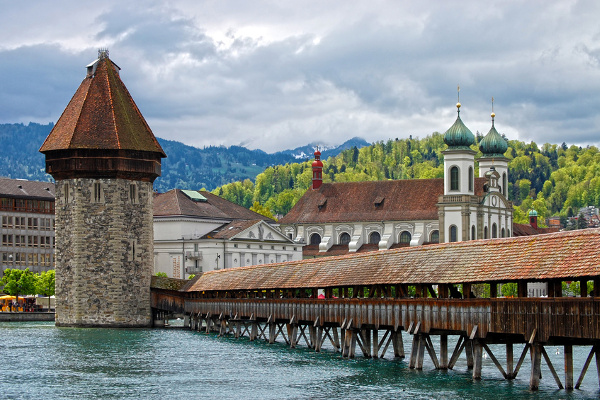
Lucerne is the capital of the Canton of Lucerne in Central Switzerland. Its pictorial location is between Lake Lucerne and the mountains Pilatus and Rigi, directly at the outflow of the Reuss. The Reuss marks the transition between the old and the new town. The old town is considered to be particularly well preserved and frequented. Therefore, it has been a popular destination for travelers for more than 170 years. Lucerne is also not lacking in international specialties. For example, the Swiss Caritas has its headquarters in the city, and UNESCO has made the Entlebuch Biosphere in Lucerne the first biosphere reservation in Switzerland.