
Radiology Bonn (NRW): Prof. Dr Attila Kovács
Treatment focus
- Ablations for cancer (radiofrequency ablation (RFA), microwave ablation (MWA), cryoablation (CRYO), and radioablation (brachytherapy))
- Electrochemotherapy for cancer (ECT)
- Kyphoplasty and sacroplasty for vertebral fractures or sacral fractures
- Prostate artery embolization (PAE) for benign prostate enlargement
- Chemoembolization of tumors (chemoperfusion/saturation (CP), transarterial chemoembolization (TACE))
- Embolization for joint and tendon problems (joint artery embolization (JAE), transarterial periarticular embolization therapy (TAPE))
- Embolization of fibroids (uterine fibroid embolization (UFE))
Contact
WEGE Klinik
Radiology
Villenstraße 8, D-53129 Bonn
P: +49 228 2865 4016 F: +49 228 5306 502
Consultation Hours:
Wednesday 9:00 AM - 4:00 PM
By appointment
Video consultation hours
Thursday 9:00 AM - 2:00 PM
By appointment

Medical Range
Range of Diagnostic Services
- Magnetic resonance imaging (MRI) of all body regions
- Spectral computed tomography (SpCT) of all body regions
- Ultrasound, including contrast-enhanced ultrasound
Range of Therapeutic Services
- Liver cancer and liver metastases
- Lung cancer and lung metastases
- Kidney cancer
- Adrenal metastases
- Lymph node metastases
- Breast cancer and breast cancer metastases (liver, lung, bone, lymph nodes)
- Soft tissue tumors, such as sarcomas and desmoids
- Prostate cancer
- Benign prostate enlargement
- Uterine fibroids
- Synovitis in osteoarthritis
- Osteoporotic vertebral and sacral fractures
- Metastatic vertebral and sacral fractures
More Information
Card
Prof. Dr Attila Kovács is head physician at the Clinic for Diagnostic and Interventional Radiology and Neuroradiology at the WEGE Klinik in Bonn, an internationally renowned institute for modern cancer therapy.
Prof. Kovács places particular focus on image-guided, i.e., interventional radiology (IR), minimally invasive therapy (MIT) procedures. He and his innovative team have been doing pioneering work in this emerging field of future medicine for many years. Thanks to state-of-the-art 3D navigation technology, very good treatment results can be achieved even with tumors that are difficult to reach, for example, in cancer therapy. By using the latest diagnostic techniques and considering all available therapeutic procedures, maximum chances of recovery, minimal side effects, and short hospital stays are made possible. Another special feature is that an individually optimized therapy concept is created for each patient—after careful analysis and interdisciplinary coordination of findings, and in accordance with the patient's state of health and personal expectations.
Prof. Kovács is a Specialist in Individualized Tumor Therapy
In modern precision medicine for fighting cancer, a distinction is made between personalized medicine in general and individualized therapy in particular. While the former focuses on the tumor's genetic and molecular changes (biomarkers), the latter also considers the patient's entire biological profile to provide a holistically tailored therapy.
Prof. Dr Attila Kovács is a specialist in individualized, minimally invasive therapies that can destroy tumors in a targeted manner without the need for open surgery. The process of this pinpoint destruction under precise imaging control (CT or MRI) is called ablation. Various methods are used, including heat, cold, electrical voltage, or medication, to safely destroy cancer cells, always sparing the surrounding healthy tissue as much as possible.
These therapies are particularly suitable for patients for whom surgical tumor removal is not possible, not advisable, or associated with increased risks, or for tumors that are difficult to access or locally defined. The procedures are performed via tiny punctures, similar to a blood draw, using thin probes precisely placed under navigation monitoring. This minimizes physical stress and pain and reduces recovery time. A particular advantage of individual MITs is their minimal impact on the patient's immune system. On the contrary, some immunotherapies benefit from combination with MIT. The aim of the treatment is effective local tumor control with the highest possible quality of life and minimal therapy-related side effects. Depending on the tumor metastases and tumor biology, MIT can significantly improve survival rates and quality of life.
Ablations of Tumors (Radiofrequency, Microwave, CRYO, and Radio Ablation)
Ablation, translated from Latin into English, means removal. In an oncological context, it refers to the removal of tumors and, in minimally invasive medicine, corresponds to the excision of tumors in classical surgery, though less invasive than the latter. The general advantages include no need for incisions, shorter anesthesia, less blood loss, and a shorter hospital stay. This means that patients can return to their normal social environment more quickly and in better health.
In general, all ablation procedures share the common feature that only locally and precisely targeted energies are administered for tumor removal, destroying tumor cells while sparing healthy surrounding tissue. Depending on the procedure, these energies include alternating current in radiofrequency ablation, microwaves in microwave ablation, freezing in cryoablation, and short-range gamma rays in radioablation (also known as brachytherapy). The different energies are always administered gently and, regardless of the energy used, via thin probes.
It is very important to know that the procedures mentioned are not used arbitrarily but are always adapted to the circumstances. The decision on which procedure is most advantageous in each individual situation is influenced by the tumor's size, nature, and location relative to surrounding structures. This means that an individual decision is made for each tumor to be treated—it may even mean that one manifestation of a tumor in the same organ is treated with one method and another manifestation with a second method. All of the procedures mentioned are suitable for safely removing tumors in various organs with few side effects when performed by experienced therapists.
Electrochemotherapy (ECT) for Tumors
Electrochemotherapy (ECT) may be the newest of the local tumor therapies, but this sophisticated technology offers several advantages. In ECT, a highly effective drug is channelled directly to tumor cells via electrical impulses. The pulses, called electroporations (EP), are used specifically to open the otherwise impermeable cell membrane of the cancer cells for a few minutes—the EP is essentially a Trojan horse. Afterwards, the cancer cell membrane closes again, but this period is sufficient to saturate the tumor cells with the drug.
This results in a first, relevant advantage: since the drug causes tumor cell destruction rather than, for example, heat, this method can also be used safely in the immediate vicinity of risk structures, such as vessels or bile ducts. Current scientific evidence (see list of publications) shows that ECT is superior to other ablation methods for large and high-risk tumors, e.g., in certain regions of the liver. Another advantage is that the excess drug, i.e., what has not been transported into the tumor cells by EP, is excreted without side effects (no hair loss, etc.).
Transarterial Chemoembolization (TACE) for Tumors
Transarterial chemoembolization (TACE) is one of the most powerful minimally invasive procedures for treating a wide range of tumor diseases. It is well established for liver cancer and liver metastases, but can also be used effectively outside the liver. TACE exploits the particularly high demand for the blood supply of cancer cells to saturate them with specially adapted drugs. The blood vessels supplying the cancer are located using navigation control. Tumor-destroying agents are then administered there, while the blood supply to the tumor is specifically reduced.
This selective approach means that the therapy acts mainly locally in the tumor tissue, while the rest of the body is largely spared. The surrounding healthy tissue usually remains unaffected, and systemic side effects are significantly lower than with conventional chemotherapy. The procedure is carried out with a puncture, similar to a blood test, and usually requires only a short inpatient stay.
Prostate Artery Embolization – Treatment for Prostate Enlargement without Surgery
Benign enlargement of the prostate (benign prostatic hyperplasia, BPH) can lead to symptoms such as frequent urination, nocturnal urination, or a feeling of residual urine. The internationally recognized specialist Prof Dr Attila Kovács offers prostate artery embolization (PAE) as an effective, gentle, and minimally invasive alternative to surgery. In this procedure, the blood vessels responsible for the increased blood flow to the enlarged prostate are selectively closed under imaging monitoring.
The reduced blood flow causes the prostate to gradually shrink, which can provide lasting relief from symptoms. The procedure is carried out via a small puncture in the blood vessel, under local anesthesia, and does not require open surgery. The recovery time is short. Affected men need to know that PAE does not harm potency, continence, or ejaculation. On the contrary, scientific studies have shown that PAE can enhance potency. PAE is therefore a proven, internationally established, and guideline-compliant treatment option for patients who wish to avoid surgical treatment or for whom other procedures are not suitable.
Many Years of Experience in the Gentle Treatment of Uterine Fibroids
Uterine fibroids are benign tumors of the uterine muscle. They can cause a variety of symptoms, such as heavy or painful menstrual bleeding, pressure in the lower abdomen, or problems with urination and, last but not least, sexual intercourse. Prof Kovács offers patients a modern, organ-preserving, and minimally invasive treatment option in the form of uterine fibroid embolization (UFE).
During UFE, the blood vessels supplying the fibroids with oxygen and nutrients are selectively occluded. As a result, the fibroids shrink in the weeks and months following the procedure, and the symptoms subside significantly. The procedure is performed through a small incision in the vessel and usually requires only a short stay in the clinic. Patients can usually return to their everyday lives shortly after the procedure. Patients need to know that the uterus is not removed; it remains intact. UFE is therefore a proven, internationally established, and guideline-compliant treatment option for patients who wish to avoid surgical removal of the uterus or for whom other procedures are not suitable.
Kyphoplasty and Sacroplasty for Vertebral and Sacral Fractures
Vertebral or sacral fractures are often caused by osteoporosis, falls, or tumor-related bone changes and can cause severe, persistent back pain. Prof Dr Attila Kovács offers kyphoplasty and sacroplasty, proven, minimally invasive procedures that stabilize the spine and relieve pain.
In both methods, medical bone cement is injected into the broken bone using thin probes. This stabilizes the fracture, improves load-bearing capacity, and provides impressively rapid pain relief. The procedure is carried out via small punctures in the skin, usually under analgesic sedation or short anesthesia. Many patients report significant pain reduction and improved mobility shortly after treatment.
Embolization for Tendon and Joint Problem
Persistent pain, swelling, and limited mobility in the joints and tendons can severely restrict everyday life, even in the absence of acute injury. The cause is often a chronic inflammatory reaction with pathologically increased blood flow to the joint lining, known as synovitis. It has been scientifically proven that arthrosis is caused less by wear and tear and more by chronic inflammation. It is also known that regular joint injections, e.g., with cortisone-containing medications, cannot stop inflammation-related cartilage degradation. Experts agree that chronic inflammation plays a significant, if not decisive, role in the development of arthrosis. In such cases, interventional radiology offers an innovative, impressively effective, and non-surgical treatment alternative to curb this chronic inflammation: transarterial periarticular embolization (TAPE).
Prof. Dr Attila Kovács uses TAPE for chronic joint and tendon pain after a preliminary examination confirming the inflammation. A thin catheter is guided through a small puncture in the vessel to locate and treat the inflamed areas. The aim is simply to close the smallest vessels that have newly formed as a result of chronic inflammation (the technical term is neovascularization). The procedure is usually short, well-tolerated, and involves little stress. The goal is lasting pain relief, improved joint function, and avoidance of major surgery.
Please visit the website of the Radiology at WEGE Klinik Bonn for more information.
Curriculum Vitae
| Dec. 2012 – to date | Head Physician for Diagnostic and Interventional Radiology and Neuroradiology, WEGE Klinik Bonn (Formerly Robert Janker Klinik) |
| 2010 - 2012 | Diagnostic and Interventional Radiology and Neuroradiology – Clinic for Radiology, Neuroradiology, and Nuclear Medicine, University of Lübeck |
| 2007 - 2009 | Diagnostic and Interventional Neuroradiology – Clinic for Radiology, Rheinische Friedrich-Wilhelms-Universität Bonn |
| 2000 - 2006 | Diagnostic and Interventional Radiology – Clinic for Radiology, Rheinische Friedrich-Wilhelms-Universität Bonn |
| 1997 - 2000 | Heart Surgery – Ludwigshafen Heart Center |
| 1992 - 1996 | State Examination, Human Medicine, Universität Heidelberg |
| 1989 - 1992 | Preliminary Examination in Medicine, Human Medicine, Christian-Albrechts-Universität Kiel |
Extras
- For optimal comfort during recovery, patients are accommodated in single or double rooms (as requested) in a Privita comfort ward. This ward offers the comfort of a luxury hotel, along with greater privacy and additional amenities, including TV, Wi-Fi, high-quality bathrooms, fine dining, and concierge service.
- Daily medical rounds by head physician Prof Kovács and his team to discuss therapy decisions together on an eye level and to review treatment progress.
- Pre- and post-therapeutic video conferences for consultation, logistical arrangements, coordination of further diagnostic and therapeutic steps, and, last but not least, for active patient participation.
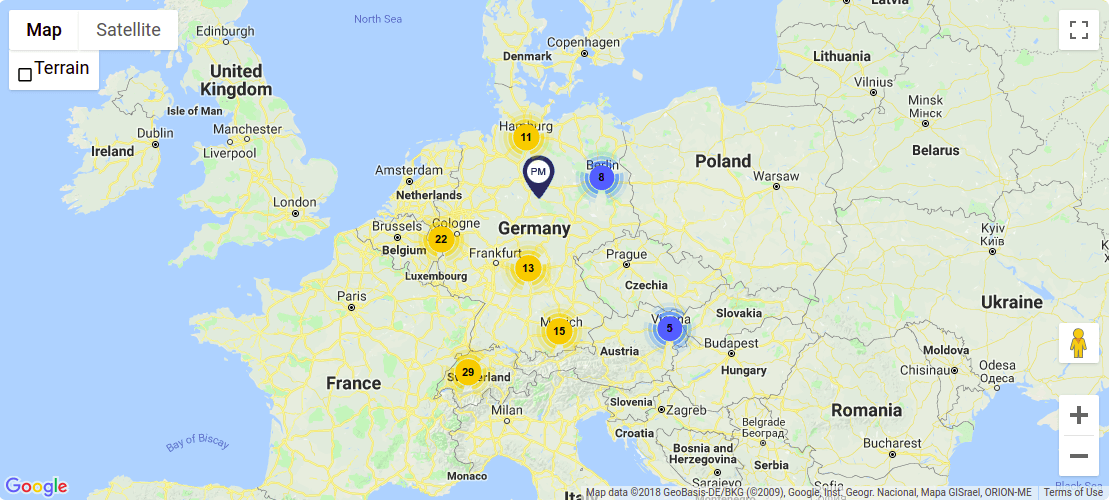
Location
Transport Connections
| Bonn Main Station | 8 km |
| Köln/Bonn Airport | 28 km |
| Frankfurt/Main Airport | 155 km |
Information about Bonn