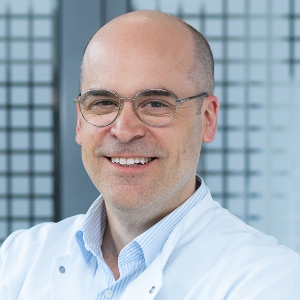

Cardiology and Angiology Duisburg (NRW): Prof Jánosi
Treatment focus
- Cardiac catheterization (diagnosis and treatment of coronary artery disease: PTCA, stent implantation, complex PCI)
- Heart valve disorders:
- Transcatheter aortic valve implantation (TAVI), and mitral and tricuspid valve replacement
- Transcatheter mitral valve reconstruction (MitraClip) and tricuspid valve reconstruction (TriClip)
- Valve-in-valve procedures for degenerated valve prostheses
- Structural heart disease (PFO, VSD, LAA closure)
- Peripheral arterial occlusive disease (PAOD, stent implantation, recanalization)
Contact
Duisburg Heart Center
Department of Cardiology, Angiology and Electrophysiology
Fahrnerstr. 133, D-47169 Duisburg
P: +49 203 3969 3526 F: +49 203 451 3206
Consultation Hours:
Monday-Friday: 7.30 AM - 16.00 PM
Note:
Patients with statutory health insurance require a referral from a registered physician in cardiology.

Medical Range
Range of Diagnostic Services
Non-Invasive Examination Procedures:
- ECG
- Stress ECG
- 2D/3D echocardiography (TTE)
- 2D/3D transesophageal echocardiography (TEE)
- Stress echocardiography
- CT
- MRI
- Stress MRI
- Complex angiology diagnostics (peripheral arterial occlusive disease, carotids, veins, etc.)
- Pacemaker/defibrillator checkups
Invasive Examination Procedures:
- Cardiac catheterization
- Coronary flow measurements (iFR and FFR measurement)
- Intravascular imaging (IVUS and OCT)
- Right heart catheterization with shunt and vasoreactivity testing
Range of Therapeutic Services
The range of services covers all catheter-based interventional techniques in the coronary and peripheral areas:
- Coronary interventions
- Balloon angioplasty of narrowed coronary arteries (PTCA)
- Placement of a vascular support (stent implantation) to keep the vessel open
- Complex PCI and recanalization (rotablation and intracoronary lithotripsy)
- Precision PCI using intravascular imaging and flow measurements (IVUS/OCT or iFR/FFR)
- High-risk interventions using Impella protection (protected PCI)
- Structural cardiac interventions
- Transcatheter aortic valve implantation (TAVI) – a gentle method of replacing the heart valve without opening the chest
- Transcatheter mitral valve implantation (TMVI)
- Transcatheter tricuspid valve implantation (TTVI)
- Transcatheter mitral and tricuspid valve repair (edge-to-edge procedure: Mitra- and Tri-Clip or PASCAL)
- TricValve
- Structural heart disease (PFO, VSD, LAA closure)
- Minimally invasive foreign body removal (e.g., dislodged catheters)
- Temporary circulatory support systems, such as Impella and ECMO
- Myocardial biopsy
- Cardioversion treatment of cardiac arrhythmias
More Information
Card
Prof Dr Alexander Jánosi is a specialist in cardiology and angiology and head physician at the Clinic for Cardiology, Angiology, and Electrophysiology at the Duisburg Heart Center of the Evangelisches Klinikum Niederrhein.
Prof Janósi and his team offer patients state-of-the-art catheter-based interventional procedures on the heart and peripheral vessels – from advanced coronary intervention with imaging (IVUS/OCT) and pressure measurement (iFR/FFR) to complex PCI of severely calcified stenoses and recanalization of chronic occlusions to structural heart valve therapies. Interdisciplinary cardiac teams decide on the optimal course of treatment.
Invasive Cardiology and Angiology: State-of-the-Art Minimally Invasive Examinations by Renowned Cardiologists
The field of invasive cardiology focuses on diagnostic and interventional procedures on the human heart. These procedures are performed in the cardiac catheterization laboratory using contrast agents and X-rays, not only on the heart and its major vessels, but also on the carotid arteries, renal arteries, and peripheral vessels (invasive angiology).
Catheters are thin, flexible plastic tubes through which contrast agents can be injected, and balloon catheters with and without pre-mounted vascular supports (stents) can be advanced. Access to the heart is gained via the groin or wrist artery against the blood flow.
Thanks to local anesthesia, the vascular puncture is relatively painless. The absence of sensitive nerve fibers inside the vessels and the heart makes general anesthesia unnecessary, allowing the patient to remain awake and engage in conversation with the treating physician during the examination of their heart. As a result, many examinations and procedures can be done in outpatient settings.
All standard procedures for invasive diagnostics (intravascular flow measurement, intravascular ultrasound, optical coherence tomography) and therapy (balloon dilatation, stenting, rotablation, shock wave therapy) of narrowed coronary arteries and peripheral vessels are available.
Transcatheter Aortic Valve Implantation (TAVI): Gentle Treatment of Aortic Valve Stenosis
Even a healthy lifestyle cannot reliably prevent aortic valve narrowing. The aortic valve acts as a check valve and prevents the blood that has been ejected from the aorta from flowing back into the left ventricle during the filling phase of the heart. If the aortic valve narrows over time, for example, due to calcium deposits, the heart must constantly exert enormous force to pump against the increased resistance.
In advanced stages, this can lead to shortness of breath, dizziness, and chest tightness. In this case, the rigid, inflexible valve should be replaced to restore blood flow and relieve the heavily strained heart. The narrowed aortic valve can be replaced either by major surgery or – in a particularly gentle procedure – with a catheter (TAVI procedure). In this procedure, the new valve is placed in the heart via a small incision, usually in the groin. For many patients, this procedure is less stressful and allows for a faster recovery.
This option was initially developed for patients with excessive surgical and anesthesia risks. TAVI therapy is far less invasive than conventional heart valve surgery. Since the chest is not opened and the use of a heart-lung machine under anesthesia is not necessary, the patient can be mobilized from bed on the day of treatment and leave the clinic after a few days of observation.
Due to these advantages, the TAVI procedure is now considered the standard procedure for most patients with aortic valve stenosis. Prof Dr Alexander Jánosi is an experienced cardiologist who routinely carries out this treatment.
Anatomic conditions and comorbidities play a decisive role in treatment planning. Detailed preliminary examinations and thorough imaging are therefore essential to recommend the optimal treatment for each patient, including the selection of the access route, valve type, and appropriate size.
MitraClip: Interventional Treatment for Mitral Valve Insufficiency
Mitral valve insufficiency refers to leakage of the mitral valve. This is the second most common acquired valvular defect after aortic valve stenosis described above.
If there is a leak in the mitral valve, part of the blood flows back into the left atrium during the heart's action, causing backflow into the pulmonary circulation. Patients experience this as oppressive shortness of breath, suffer from water retention, and have a significant decrease in their ability to cope with everyday life.
If this pathological stress persists over a more extended period, it is accompanied by chronic damage to the heart muscle. Open surgery was the only possible corrective measure for this clinical picture for a long time. Such surgery, however, is not an option for many patients due to severe concomitant diseases, advanced age, or a severe restriction of the heart's pumping function.
Therefore, a catheter-based mitral valve repair procedure using MitraClip has been developed to reduce mitral valve leakage without surgery. A small metal clip is advanced through the inguinal vein to the mitral valve via a controllable catheter. It connects the two leaflets of the mitral valve, allowing the defective valve to close more tightly as a result. Opening of the chest is not required for this procedure.
The same procedure is also available for the treatment of tricuspid valve regurgitation (TriClip).
Experienced Center for Closing Defects in the Atrial Septum
Congenital defects (“holes”) in the atrial septum are usually detected early and then treated by a pediatric cardiologist. In adult patients, catheter-assisted closure is rarely considered, but when it is, it can usually be performed without complications.
The so-called patent foramen ovale is more common, a malformation that can be associated with cerebral embolisms in particular. This is a slit-shaped opening in the overlap area of the two leaves of the atrial septum, which only becomes visible when the pressure in the right atrium exceeds that in the left atrium.
This connection is essential for the unborn child in the womb, but in most people, it “grows together” after birth. The foramen ovale does not close in approximately 20% of adults. If an open foramen ovale is found in younger patients (< 60 years) with a cerebral infarction of unclear cause, it is presumed to be significant as a passageway for blood clots and should be closed.
This type of closure can be carried out quite easily using a catheter with a specially designed “occluder.” The Duisburg Heart Center also has extensive experience in this area—patients benefit from close cooperation with colleagues in pediatric cardiology.
Curriculum Vitae
| since 2025 | Head Physician at the Clinic for Cardiology, Angiology, and Electrophysiology at the Duisburg Heart Center, Evangelisches Klinikum Niederrhein GmbH |
| 2022-2025 | Representative Director of the Clinic for Cardiology and Angiology at Universitätsklinikum Essen |
| 2020 | Medical Specialist in Internal Medicine and Angiology |
| 2017 | Master of Health Business Administration (MHBA), Faculty of Law and Economics, Friedrich-Alexander-Universität Erlangen Nürnberg |
| 2016-2025 | Head of Structural Heart Disease and Head of Cardiac Catheterization Laboratories, Department of Cardiology and Angiology, Universitätsklinikum Essen |
| 2015 | Appointment as Senior Consultant, Clinic for Cardiology and Angiology, Universitätsklinikum Essen |
| 2013 | Specialist in Internal Medicine and Cardiology |
| 2011-2016 | Senior Physician, Internal Medicine Intensive Care Unit, Department of Cardiology and Angiology, Universitätsklinikum Essen |
| 2011 | Additional Title “Intensive Care Medicine” |
| 2010 | Medical Specialist in Internal Medicine |
| 2004 | Full Medical License |
Additional Qualifications
- Lipidologist (DGFL)
- Heart Insufficiency (DGK)
- Interventional Therapy for Arterial Vascular Diseases (DGK, DGA)
- Interventional Cardiology (DGK)
- Hypertensiology (DHL)
Team
- Dr Ute Ruprecht
- Senior Physician in Charge / Head of Section Electrophysiology
- Dr Ilse Janicke
Senior Physician in Charge - Dr Mathias Kullmer
Senior Physician in Charge
Plus, another 12 senior physicians and 30 assistant physicians
Extras
Interdisciplinary care of diseases in the overlapping areas is possible due to the close interaction with the Departments of Cardiac Surgery and the Department of Pediatric Cardiology and Adults with Congenital Heart Defects. This applies to combined interventional and cardiac surgery (hybrid interventions). The immediate spatial coexistence of cardiac surgery and cardiology and the immediate availability of cardiac surgery expertise increases the safety of interventional procedures.
Location
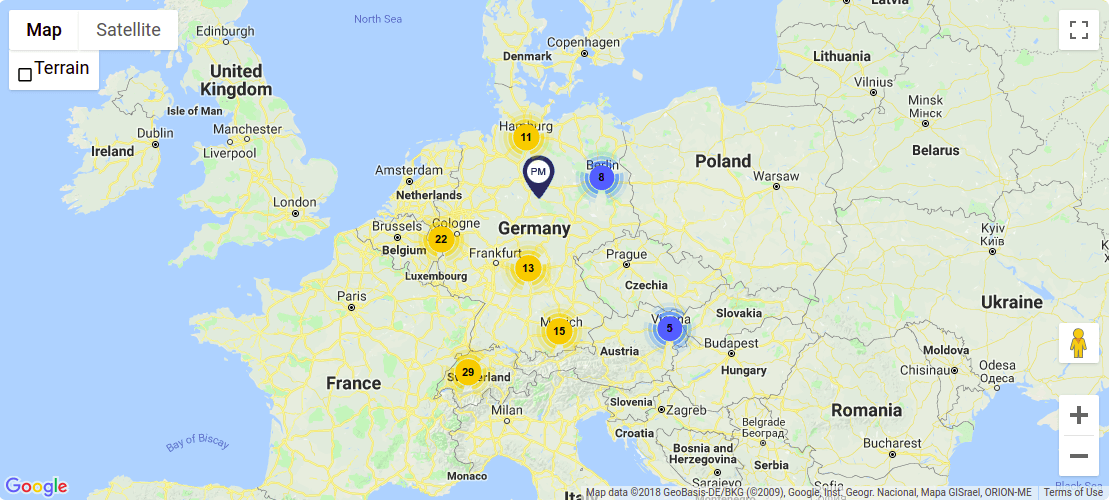
Transport Connections
| Duisburg Main Station | 6.6 km |
| Essen/Mühlheim Airport | 21 km |
| Düsseldorf Airport | 28 km |
| Cologne/Bonn Airport | 75 km |
Information about Duisburg
Duisburg is the hinge into three regions: the idyllic Lower Rhine, the bubbling Ruhr area, and the legendary Rhine rail.
Duisburg, the inland port city on the Rhine and Ruhr, stretches from the western edge of the Ruhr metropolis to the Lower Rhine and merges with the Rhine rail to the south. The city sees itself as a hub of tourist and logistical routes and assumes an interesting hinge function within the varied regions.