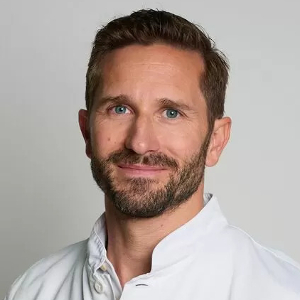
Knee specialist Zurich (Switzerland): PD Dr Marcus Mumme
Treatment focus
- Arthroscopic, minimally invasive, and open knee joint surgery
- Sports injuries and overuse complaints
- Conservative and reconstructive meniscus surgery (including revisions and meniscus replacement)
- Full range of cartilage regeneration therapies (cartilage cell transplantation, bone marrow stimulation procedures, biomaterials, bone augmentation, new tissue engineering therapies, revision cases)
- Patellar instability (ligament reinforcement, trochleoplasty, osteotomies)
- Anterior knee pain syndrome and patellar arthrosis
- Cruciate ligament injuries and collateral ligament injuries (all reconstructive ligament plasty)
- Joint-preserving arthrosis therapy, including leg axis corrections
Contact
SportClinic Zurich
Klinik Hirslanden
Witellikerstrasse 40, CH-8032 Zurich
Consultation Hours:
By appointment
Medical Range
Range of Diagnostic Services
- X-ray
- Ultrasound
- Magnetic resonance imaging
- Computed tomography
Range of Therapeutic Services
- Arthroscopic knee joint surgery (minimally invasive and open)
- Sports injuries
- Overuse complaints
- Meniscus surgery
- Cartilage regeneration therapies
- Patellar instability
- Patellar arthrosis
- Ligament injuries
- Conservative therapies, injection therapies
- Treatment of joint-related bone pathology, e.g., bone bruise, chronic bone edema, bone necrosis, and bone cysts
- Treatment of specific knee pathologies in children and adolescents
- Revision cases and second opinions
More Information
Card
PD Dr Marcus Mumme is a specialist in orthopedic surgery and traumatology of the musculoskeletal system, with a focus on knee surgery at the Sportclinic Zurich of the Klinik Hirslanden in Zurich.
The complex structure of the knee joint makes it susceptible to injury and wear and tear, which often leads to damage to the meniscus, ligaments, or cartilage. PD Dr Mumme treats these conditions using innovative, minimally invasive, and orthobiologic approaches, such as arthroscopy, cartilage transplantation, and computer-assisted surgery, which enable patients to resume sporting activities even after knee injuries.
Specialist in Regenerative Treatments for Cartilage Damage
PD Dr Marcus Mumme is one of the leading specialists in regenerative and joint-preserving therapies for cartilage damage in the knee. Thanks to his many years of clinical experience in reconstructive knee surgery and his specialization in modern biological procedures, he has extensive expertise in treating early and advanced cartilage injuries. His goal is always to preserve natural joint function, reduce knee pain, and, as much as possible, prevent the development of knee osteoarthritis.
Cartilage damage is often caused by excessive overuse, sports injuries, or age-related changes, and usually significantly impairs the load-bearing capacity of the knee joint. A central component of Dr Mumme's therapy is precise arthroscopic diagnosis. Damaged cartilage areas can be reliably assessed, and micro-invasive reconstructive techniques can be used via a few small incisions.
Various joint-preserving procedures are available depending on the size and depth of the defect, including cartilage smoothing, microfracturing, or more complex reconstructive measures. For localized cartilage defects, Dr Mumme also relies on modern transplantation techniques that use the body's own cells or tissue structures to restore the joint surface as naturally as possible.
Early therapy is crucial for successful treatment. The earlier cartilage damage is detected and treated in a targeted manner, the greater the chances of maintaining joint function in the long term and preventing knee arthrosis later on. Particularly active patients benefit from this joint-preserving approach, which can improve resilience in everyday life and sports in the long term.
Meniscus Regeneration: Preserving Natural Knee Function
The meniscus plays a central role in the stability and protective function of the knee joint. Damage to this important shock absorber often leads to pain, blockages, or progressive cartilage loss. PD Dr Marcus Mumme, therefore, consistently pursues a meniscus-preserving approach whenever medically possible. His primary goal is to restore the natural function of the meniscus to ensure the long-term resilience of the knee joint.
The treatment begins with a detailed clinical examination and precise imaging to accurately assess the extent of the injury. Afterwards, a decision is made as to whether conservative therapy is sufficient or surgical intervention is necessary. When performing surgery, Dr Mumme uses modern arthroscopic techniques that enable a highly accurate assessment of the tear while protecting the surrounding tissue.
Depending on the type of tear, the meniscus can be sutured and fully preserved. This method is particularly promising for acute injuries and areas with good blood circulation. However, if the meniscus is already severely damaged, defective segments can be smoothed or reconstructed in a targeted approach to restore function as much as possible.
Meniscus replacement may be considered in more complex cases. As an experienced knee surgeon, Dr Mumme decides on a case-by-case basis which method offers the best anatomical and functional results. Individual factors such as activity level, joint axes, and accompanying injuries are always considered in the treatment plan to ensure a stable, functional knee.
Knee Specialist for Sports Injuries, Cruciate Ligament and Collateral Ligament Injuries in Zurich
Cruciate and collateral ligaments stabilize the knee joint. If the cruciate ligaments are injured, instability must be avoided to prevent premature wear of the joint cartilage. A cruciate ligament rupture does not always require surgical treatment. The goal for sports-related injuries is often to focus on targeted muscle building, as this can also stabilize the knee joint. PD Dr Marcus Mumme decides on an individual basis whether cruciate ligament surgery is appropriate for each patient, depending on their personal situation.
If cruciate ligament surgery is carried out, in most cases it involves cruciate ligament replacement using the patient's own tendons and ligaments or a donor transplant. Rehabilitation after cruciate ligament surgery is a lengthy process and requires not only special treatment and care but also intensive cooperation from the patient. Thanks to a structured rehabilitation protocol at SportClinic Zurich, the return to sport and everyday life can be optimally supported.
In cases of collateral ligament injuries, PD Dr Mumme also carefully assesses whether conservative treatment is sufficient or surgical stabilization is necessary. The decisive factors here are the extent of the instability, the degree of activity, and any additional joint structures that may have been injured. Thanks to his proven expertise in treating complex ligament injuries, PD Dr Mumme uses modern procedures that restore the original function of the ligament as precisely as possible.
Stabilization for Patellar Instability & Patellar Luxation
Sports-related knee injuries, such as patella problems, are particularly common at SportClinic Zurich. PD Dr Marcus Mumme always takes individual factors, such as age, activity, accompanying injuries, and instability patterns, into account when planning optimal treatment.
He combines conservative measures, such as muscle-strengthening exercises, with modern sports surgery for patellar instability. The aim is to stabilize the kneecap permanently and prevent further dislocations. By analyzing biomechanical causes with precision, PD Dr Mumme can apply surgical techniques such as ligament reinforcement, corrective osteotomies, or trochlear procedures to achieve lasting functional improvement.
Anterior knee pain and patellar osteoarthritis are often caused by misalignment of the kneecap, overuse, or the consequences of previous injuries. PD Dr Marcus Mumme attaches great importance to a precise analysis of the causes, as the therapy is always individually adapted. Conservative measures such as physiotherapy-guided muscle building, stabilization of the leg axis training, and optimization of the movement pattern form the basis.
Joint-preserving procedures may be considered in cases of pronounced structural changes, such as corrective osteotomies to improve patella guidance or minimally invasive smoothing of damaged joint surfaces. The aim is to reduce pain in the long term, improve joint function, and ensure long-term resilience for everyday life and sports.
SportClinic Zurich: A Clinic With a Passion for Sports Medicine
SportClinic Zurich offers athletes comprehensive care at the highest medical level. PD Dr Marcus Mumme works here in an interdisciplinary team that treats acute injuries just as competently as chronic complaints or overload problems. In addition to precise diagnostics, the focus is on individually tailored treatment concepts that optimally combine conservative measures and modern surgical techniques.
Athletes benefit from short distances between diagnostics, therapy, and rehabilitation. The goal of the SportClinic is always functional recovery that enables both everyday functionality and long-term athletic performance.
Please visit the SportClinic Zurich website for more information.
Curriculum Vitae
| Since 2024 | Medical Practice / Partner at SportClinic Zurich |
| 2019 - 2024 | Head of Cartilage Surgery and Regenerative Knee Surgery, Universitätsspital Basel |
| 2019 - 2024 | Head of Pediatric Sports Orthopedics and Knee Surgery, Universitätskinderspital Basel |
| 2015 - 2018 | Senior Physician, Knee Surgery, Universitätsspital Basel and Universitätskinderspital |
| 2008 - 2014 | Assistant Physician Training at Hôpital Fribourgeois, Universitätsspital Basel, Schulthessklinik Zurich |
Location
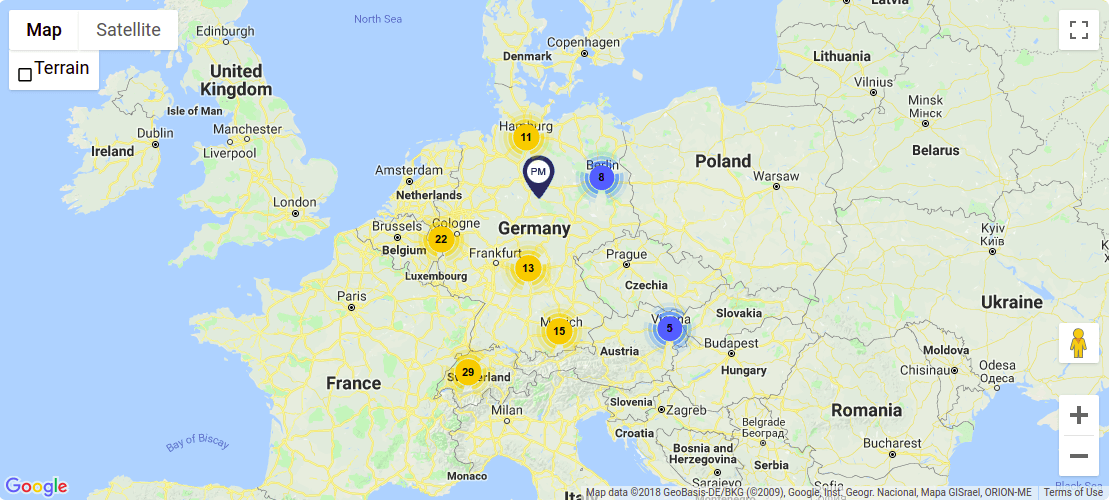
Transport Connections
| Zurich Main Station | 5 km |
| Zurich Airport | 15 km |
Information about Zurich
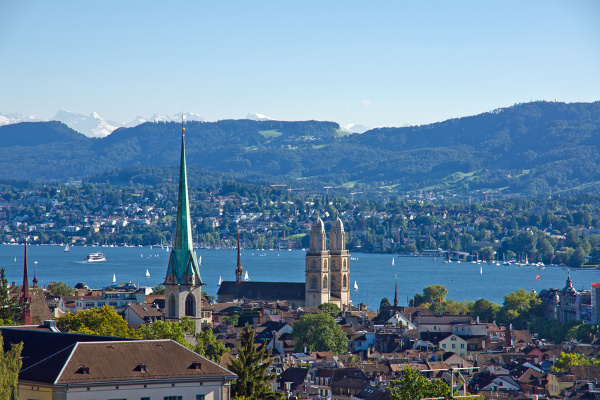
The capital of the canton of the same name is also the largest city in Switzerland. Geographically it is located north in eastern Switzerland. Zurich is situated on the Limmat River, directly at the outflow of Lake Zurich, and is thus also called the "Limmat City." Economically, socially and scientifically, Zurich is considered the center of Switzerland. Therefore, large banks, many media companies, and international companies are located there, and at the same time, the cultural offer is rich. The well-known Swiss Federal Institute of Technology Zurich (ETHZ) gives Zurich an international name in educational institutions.